Tailings are the leftover (waste) material that is generated during milling and ore processing, when ore is separated from host rock material. At Eagle River and Kiena, tailings generated from ore processing are stored in tailings management areas (TMAs). Guided by our Tailings and Water Management Policy, we have established processes for managing our TMAs, recognizing that tailings-related incidents have the potential to result in severe and long lasting negative environmental and human health impacts. Our governance structure and management approach to tailings management is discussed on our website.
Tailings management is operationalized through our Company-wide Tailings Management Standard, which is reviewed annually. Our most recent update of the Standard was in 2025. The standard is based on guidance from the Canadian Dam Association (CDA) and the Global Industry Standard on Tailings Management (GISTM) and is aligned with the TSM Tailings Management Protocol.
In 2025, we developed a Company-wide Tailings Communication Plan to improve the reporting and communication of tailings performance data, compliance, changes to risk levels, and site level activities through relevant parts of the organization. We also formalized the documentation control processes for tailings-related internal communications and management.
Waste rock is a necessary by-product of mining operations and is generated to access gold-bearing ore in our underground mines. Waste rock may be placed as backfill underground or may be placed on the surface in temporary waste rock piles.. When waste rock is stored on surface, , we maintain a focus on the geotechnical and geochemical stability of the stockpile.
Waste rock is also assessed for acid rock drainage and metal leaching potential, and the results of these assessments inform handling, segregation, and storage practices. Waste rock management is governed by regulatory requirements and internal Wesdome standards. Further details on how we manage waste rock are available on our website.
During the reporting period, we did not have any instances of non-compliance with tailings and waste rock standards, permits, or regulations.1
1 Ore and waste rock at both sites are non-acid generating, with low potential for metals leaching. There is no acid rock drainage predicted to occur or under treatment, remediation, or active mitigation at either Eagle River or Kiena.
Reused approximately 70,000 cubic meters of tailings material during construction of the Kiena north cell raise.
Annual Performance Summary
Eagle River
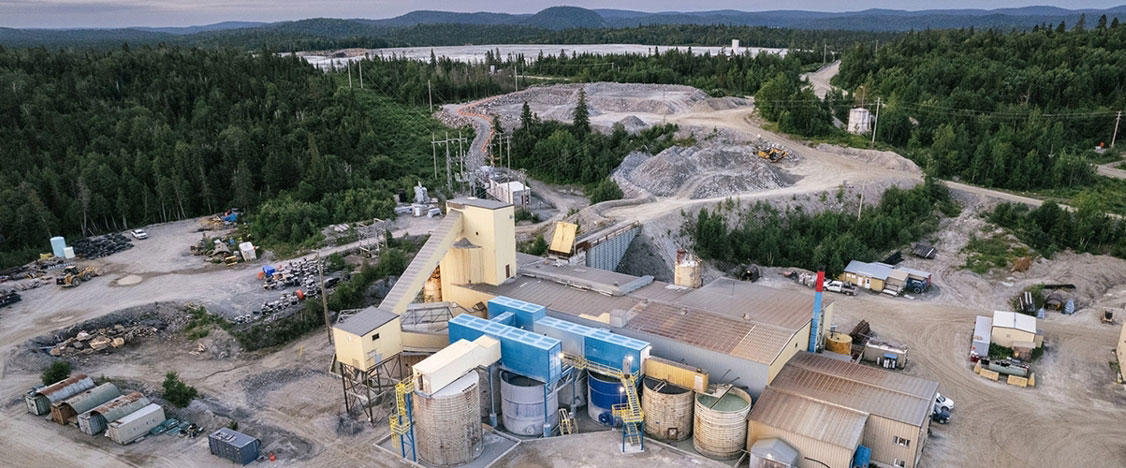
The Eagle River TMA, originally designed for conventional slurry deposition in 1989, was modified and has operated as a filter stack facility since 2007, with tailings filtered to approximately 16–20% moisture before placement in the facility. TMA infrastructure includes dams, a spillway, seepage and collection ponds, and diversion ditches. Waste rock is either backfilled underground or stockpiled on surface and repurposed, where possible, for construction activities, including TMA raises.
Eagle River recorded an increase in tailings generated from 222,526 tonnes in 2024 to 257,447 tonnes in 2025, and a decrease in waste rock volumes from 344,678 tonnes in 2024 to 277,222 tonnes in 2025. The increase in tailings generated reflects higher ore throughput, water consumption and processing volumes, while the decrease in waste rock generated is attributable to reduced development activity and a greater focus on mining from established stopes. This shift in mine sequencing resulted in increased ore processing with comparatively lower volumes of waste rock generated.
Wesdome’s Independent Tailings Review Board (ITRB) conducted its annual site visit and performance review of the Eagle River TMA in June 2025. The ITRB provided recommendations that have been added to Eagle River’s recommendations tracker and are being addressed. The Engineer of Record (EoR) completed a dam safety inspection in September 2025 and identified several recommendations to be addressed in early 2026.
We completed a dam raise of Eagle River’s TMA in 2024. Following the raise, in 2025 we advanced planning for an additional raise in 2026. As part of this planning process, we completed a geotechnical characterization program, the final engineered design of the raise, and submitted a permit application for the raise. At the TMA, we installed additional instrumentation and improved overland pipeline systems by regrading a corridor to create a level surface to lay the pipe to minimise freezing risk. We also installed a third, redundant pipeline to increase freshet water transfer capacity between the TMA and the previously operating Mishi open pit mine, which is used to temporarily store water prior to treatment and discharge.
In 2025, following further engineering assessment, we continued to explore options for our long-term tailings management strategy at Eagle River. This included further considering the construction of a new standalone TMA, as well as evaluating the potential conversion of the Mishi Pit as a tailings storage option. In the year ahead, we plan to further assess both options to accommodate future production growth. We will additionally conduct a dam breach analysis that will inform an update to the Emergency Preparedness and Response Plan (EPRP). While dedicated tailings-specific engagement was limited during this early evaluation phase, tailings considerations were incorporated into ongoing and frequent community and stakeholder engagement activities. More focused engagement will be undertaken as planning progresses.
Overview of Tailings Management Area
Facility Name
Miron Creek Tailings Management Area
Location
Kilometre 50, Paint Lake Rd., Wawa, Ontario, Canada
Ownership Status
100% Owned and Operated by Wesdome Gold Mines Ltd.
Operational Status
Active
Construction Method
Upstream (South Dam/Main Rockfill Dam)2
Downstream (North Perimeter Berm)
Downstream (North Containment Dam)
Maximum Permitted Storage Capacity (Mm3)
9.09
Current Amount of Tailings Stored (Mm3)
8.74
Consequence Classification
High
Date of Most Recent Independent Technical Review
20254
Material Findings
None
Mitigation Measures
N/A
Site-specific EPRP
Yes
Kiena
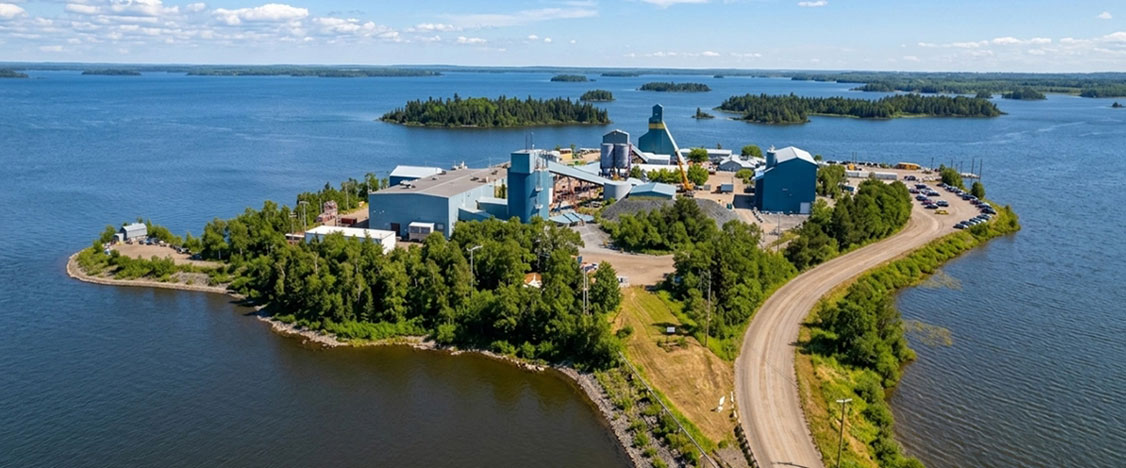
Before the restart of operations in 2021, Kiena’s TMA underwent extensive upgrades, including an upstream raise of the facility’s north cell, to ensure the facility would meet current industry standards. Since 2022, we have operated a paste plant to backfill mined-out underground areas with paste tailings material. Over the life of the mine, we expect to backfill over 30% of the tailings generated from the underground mine, reducing surface storage needs and extending the lifespan of the TMA. Waste rock is stored in a single stockpile, and since 2022 it has been used for construction activities at the TMA.
Kiena saw a slight increase in tailings generated, up from 216,755 tonnes in 2024 to 219,167 tonnes in 2025, reflecting stable to moderately higher ore throughput and processing activity. Waste rock generated at Kiena saw a significant increase, rising from 243,743 tonnes in 2024 to 345,805 tonnes in 2025, driven by continued development of the Presqu’ile portal and ramp project, increased production from the underground mine, as well as efforts to expand access to future mining areas. This reflects a combination of ongoing production and investment in future operational capacity.
Wesdome’s ITRB conducted its annual site visit and performance review of the Kiena TMA in September 2025, and identified several recommendations, which are currently being addressed. Kiena’s EoR completed a dam safety inspection in June 2025, and the resulting recommendations are also being addressed. In accordance with MAC TSM requirements, we additionally completed a management review of the TMA in December 2025. Several findings emerged from this review, and an action plan has been developed for 2026. In 2025, we updated our dam breach assessment, which informed the update of Kiena’s EPRP. The EPRP will be finalized in 2026.
In October 2025, we completed a raise of the north cell, following a toe berm raise in January 2025. The raise of the north cell was completed with zero safety incidents, and utilized ~70,000 cubic metres of existing tailings during the construction process. In 2026, we will focus on updating our risk register to reflect the north cell raise, and on conducting a stability analysis for further potential TMA raises to meet Kiena’s growth plan. While we had planned to also construct an internal spillway to allow for passive drainage from the north cell to the south cell of the facility, this work was postponed until 2026.
In 2025, we engaged with local communities and Indigenous groups on topics related to tailings and tailings management during a series of town hall meetings that occurred from October 14th to 16th 2025.
Overview of Tailings Management Area
Facility Name
Kiena Tailings Management Area
Location
950 chemin Kienawisik, Val-d’Or, Québec, Canada
Ownership Status
100% Owned and Operated by Wesdome Gold Mines Ltd.
Operational Status
Active
Construction Method
Upstream3
Maximum Permitted Storage Capacity (Mm3)
8.25
Current Amount of Tailings Stored (Mm3)
8.17
Consequence Classification
Very High
Date of Most Recent Independent Technical Review
20255
Material Findings
None
Mitigation Measures
N/A
Site-specific EPRP
No
2 The original construction method of the Eagle TMA was downstream; however, in 2007 the TMA was modified to an upstream raised dam to store filtered tailings. In 2017/2018, a stabilization berm was constructed on the downstream slope and along portions of the toe of the South Dam.
3 The first two phases of dam raises of the Kiena TMA were constructed using the downstream method, and the raises completed in 2021 and 2022 were constructed using the upstream method.
4 ITRB conducted its annual site visit and performance review of the Eagle River TMA in June 2025. Engineer of Record (EoR) completed a dam safety inspection in September 2025.
5 ITRB conducted its annual site visit and performance review of the Kiena TMA in September 2025. EoR completed a dam safety inspection in June 2025.
Tailings & Waste Rock Generation
Performance
Indicators:
SASB: EM-MM-150a.1, EM-MM-150a.6, EM-MM-160a.2, EM-MM-540a.1, EM-MM-540a.2, EM-MM-540a.3 (partial)
GRI: 3-3, 14.6.2, 14.6.3